
Beta access

CONTENT

A content optimization tool, from plan to draft

Badgerfly's Content group is a content optimization tool for agencies and SEO teams. It maps the keyword each page of a site should target, plans the pages a site is missing, and grades a draft against the ten pages already ranking for its keyword, so writers know what to add before anything is published.
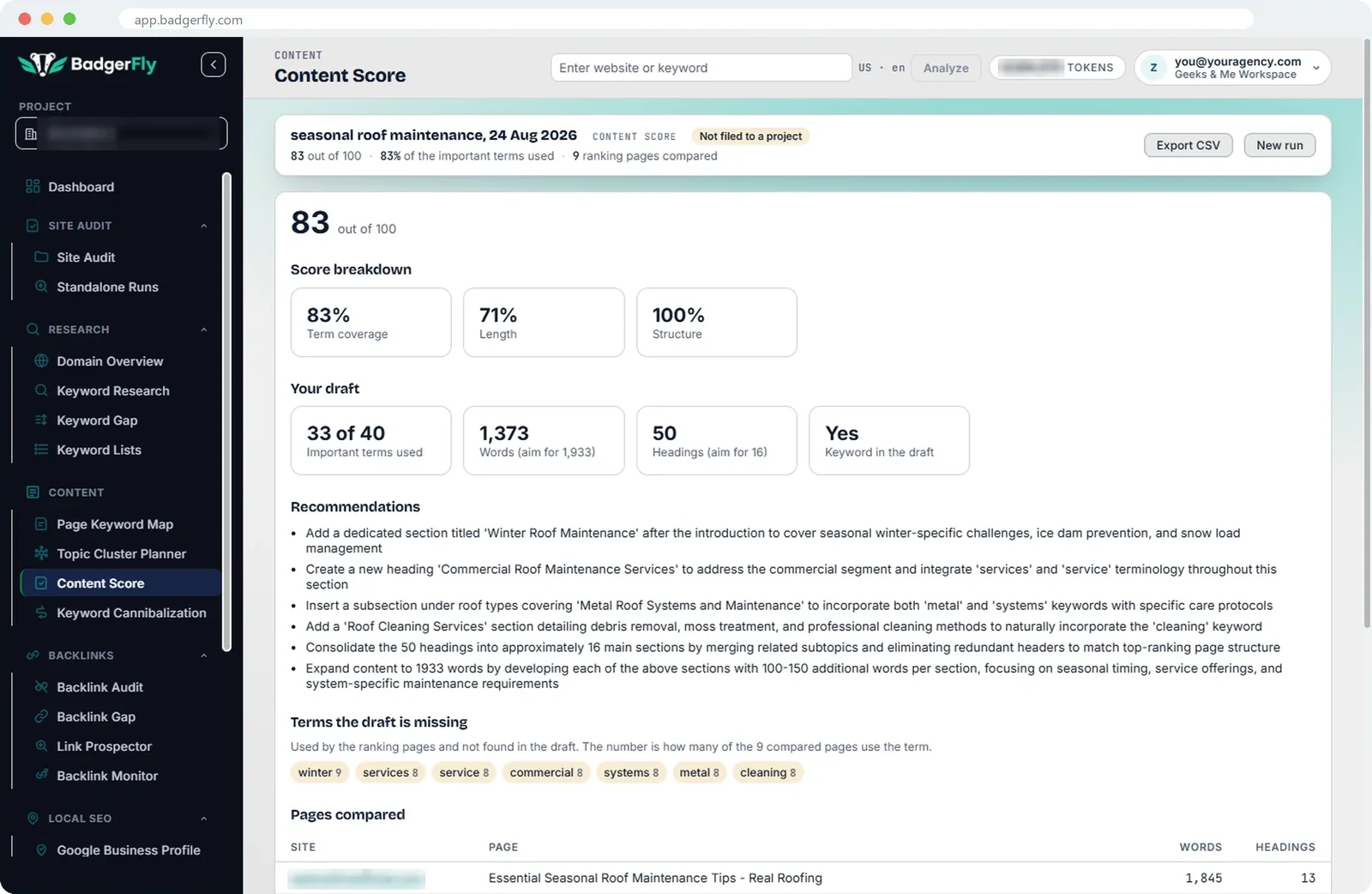
Content Score result: a draft's score from 0 to 100, with the breakdown, missing terms and recommendations

Four SEO content tools in one group

Module What it does
Page Keyword Map Which keywords each page should target, plus blog topics people are already asking about.
Topic Cluster Planner A ranked content plan: the main pages, the pages that support them, and a keyword for each.
Content Score Grade a draft against the pages already ranking, and see what it is missing.
Keyword Cannibalization Find the pages on a site that compete with each other, and the fix for each.

Page Keyword Map: keyword mapping for the site as it is

Page Keyword Map reads a site's pages and gives each one a primary keyword and supporting keywords, with the monthly searches for each. Connect Google Search Console and it works from the site's real search data; without it, it runs from the sitemap alone.

It also builds a blog backlog. Post ideas come from discussion and Q&A threads that already rank, each with its keyword and monthly searches, so the list starts from questions people are asking rather than guesses.

The search figures are national volume, with close wordings of the same search counted once. A run reads up to a set number of pages and is charged only for the pages it analysed.
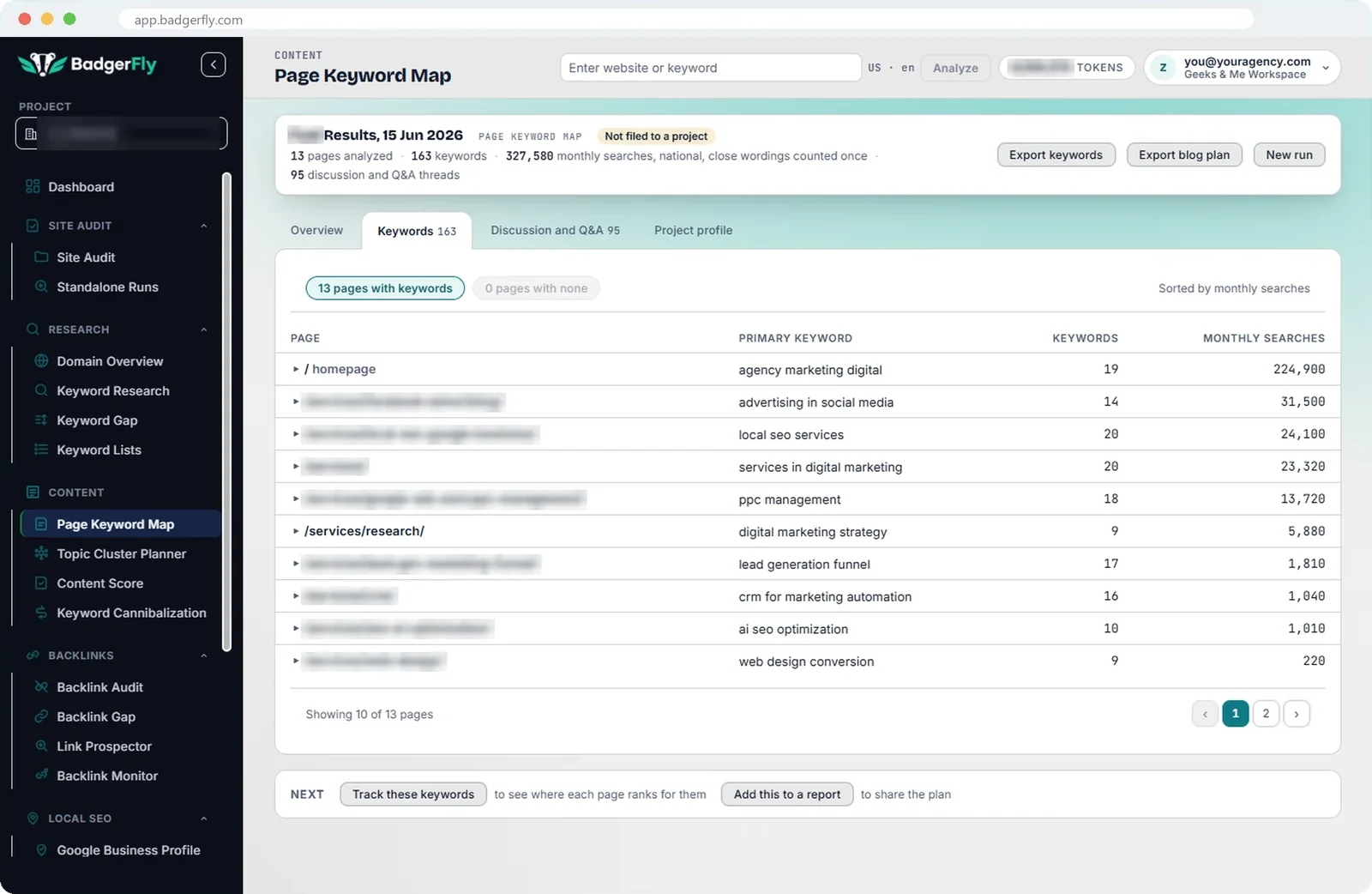
Page Keyword Map: each page of the site with its primary keyword, keyword count and combined monthly searches

Topic Cluster Planner: topic clusters from up to ten keywords

Give the planner up to ten starting keywords and it produces a ranked content plan:

  • Hubs: the main topic pages, ranked by their combined monthly searches
  • Spokes: the supporting pages under each hub, each built around its own primary keyword
  • Checked keywords for every page, with monthly searches, difficulty and intent
  • Blog topics: question keywords for a page, kept apart from its target keywords

A short business description keeps the plan on topic. Add a site address and every planned page is marked covered, partly covered or missing, so the content gaps are plain to see. No website is needed: the planner works for a site that does not exist yet. Plans export to Excel and CSV, ready to hand to a writer.
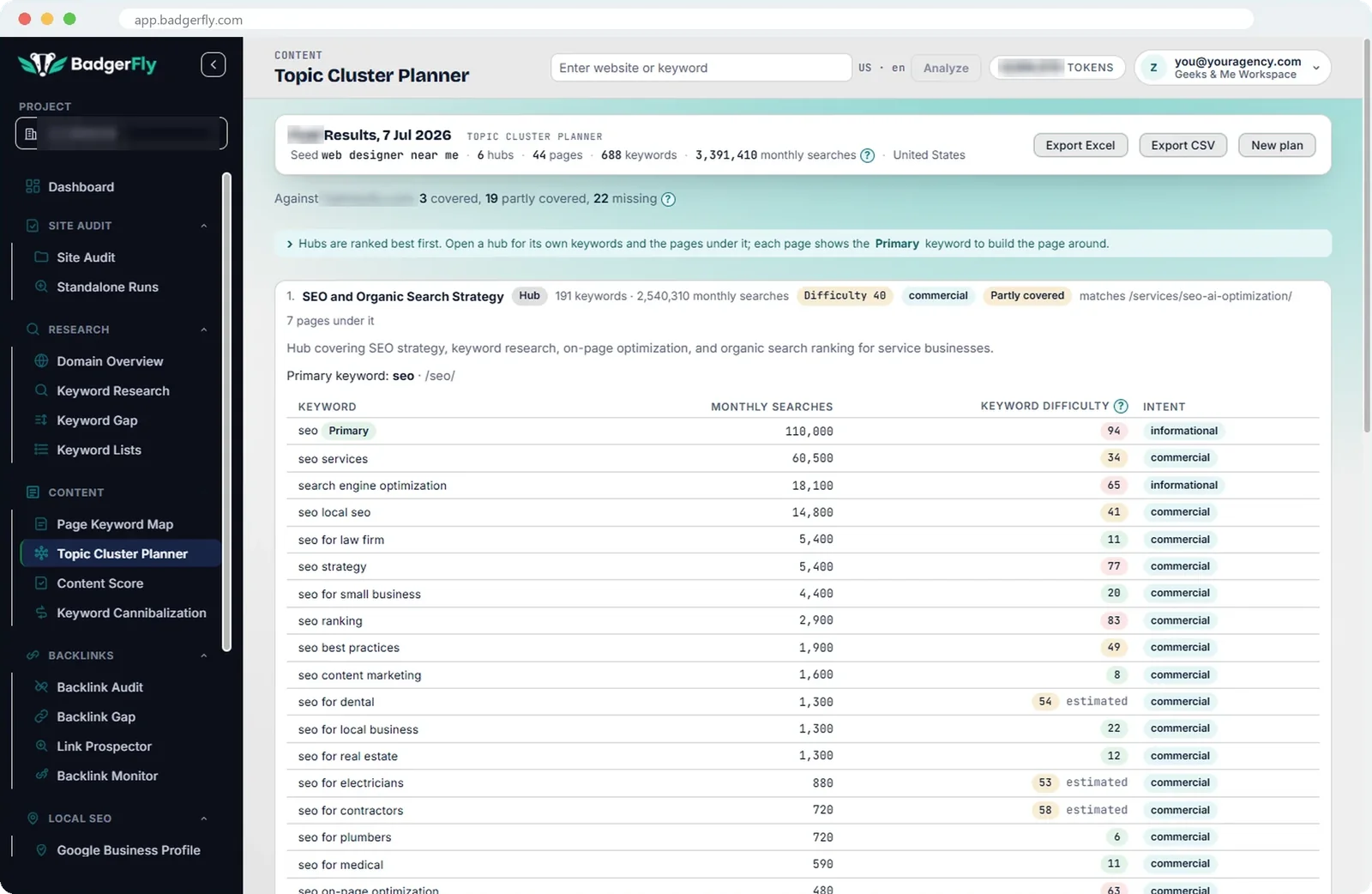
Topic Cluster Planner: hub pages, the pages under each, and the keyword, volume, difficulty and intent for every page

Content Score: grade a draft before it goes live

Paste a draft, or give the address of a live page, plus its target keyword. Content Score compares it with the ten pages ranking for that keyword and returns a score from 0 to 100, split three ways:

Beside the score are the terms the draft is missing and the specific changes that would raise it most. The pages compared are the ones in the top ten when you run it, and they are listed with the result, so a writer can read exactly what the draft is being measured against.

  • Term coverage: the words and subjects most ranking pages use
  • Structure: the headings
  • Length: against the ranking pages

Pages on one site that compete with each other

The fourth module, Keyword Cannibalization, finds pages on the same site fighting over one search, names the page that should win, and recommends a fix for the others. It reads the site's Search Console data or an imported file. It has a page of its own: See how Keyword Cannibalization works

A content planning tool that connects to the rest

Content work in Badgerfly starts from the same project as everything else. Keywords picked in the planner can be saved to a keyword list and sent to a position tracker, so you can see whether the new pages rank. A finished page can be scored again after an edit. And the Research group feeds both: a keyword gap is often the first line of a content plan.

What it costs

Page Keyword Map is charged only for the pages it read, and reopening a finished plan, map or score is free. How tokens work

Questions

What is a content optimization tool?

A tool that compares a page or a draft with the pages already ranking for its keyword and says what to add. Content Score does this; Page Keyword Map and the Topic Cluster Planner decide what each page should target in the first place.

Can the Topic Cluster Planner cluster a keyword list I already have?

It starts from up to ten seed keywords rather than a pasted list, and builds the clusters and checked keywords from those.

Does the planner need a website?

No. A site address is optional; with one, each planned page is marked covered, partly covered or missing.

Do I need to connect Search Console?

No. Page Keyword Map runs from the sitemap alone, but with Search Console connected it works from the site's real search data.

PRIVATE BETA

Try Badgerfly on real work

Badgerfly is built and runs end to end, and it is in a private beta for agencies, freelancers and in-house SEO teams. Beta accounts are free, with a monthly allowance for real audits, research and tracking. All we ask is honest feedback.